
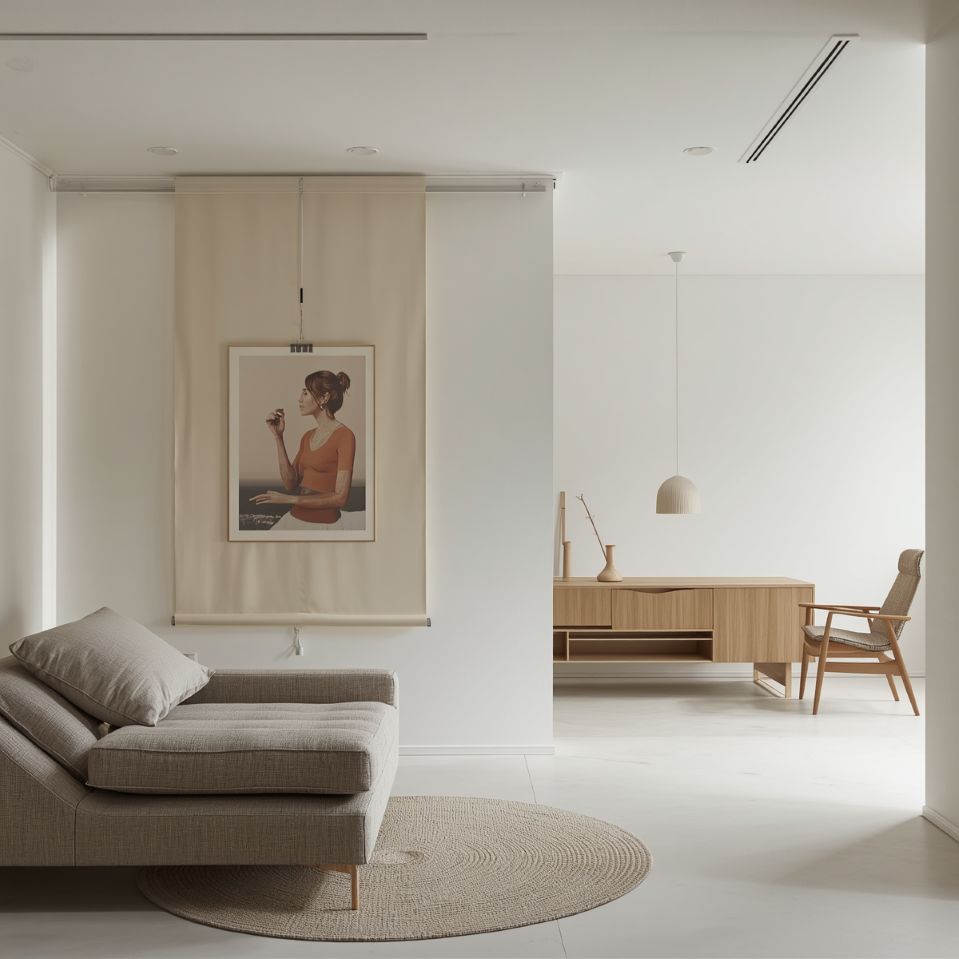
Studies from the American Psychological Association show that visual and environmental clutter can increase stress levels and reduce focus, especially when people feel surrounded by objects or systems they cannot easily change. In modern living, this overload is not limited to homes. It extends to schedules, routines, and even mental space, where too many permanent decisions slowly build a sense of fatigue and pressure.
One simple example of flexible, low-clutter thinking can be seen in how adaptable tools are designed for changing environments. A useful reference point is retractable banner stands NYC, often used in event and display settings where space must remain clean and adjustable. While originally designed for visual presentation, the idea behind these systems offers a broader lesson: not everything needs to be permanent to be useful. Some structures are most valuable when they appear only when needed and disappear when they are not.
This idea becomes more relevant when applied to everyday life. Many people unknowingly build “permanent layers” into their homes, routines, and responsibilities, even when their lives require flexibility. Learning to design more adaptable systems can make daily living feel lighter and more manageable.
The Weight of Permanent Living
Modern life often encourages permanence. Furniture stays in one place for years. Routines are built to last indefinitely. Even habits are treated as fixed commitments rather than adjustable patterns. Over time, this creates what behavioral experts describe as “accumulated rigidity,” where too many fixed elements limit a person’s ability to adapt.
Mayo Clinic research on stress management notes that environments with fewer unnecessary stimuli tend to support better emotional regulation. When spaces feel crowded or unchangeable, the mind often mirrors that feeling, leading to mental fatigue and reduced clarity in decision-making.
This is not about removing structure. It is about recognizing when structure becomes too heavy to adjust. Life naturally changes, and systems that cannot shift with it often become sources of pressure rather than support.
The Idea of Temporary Structure
Temporary structure is a simple but powerful concept. It means creating setups that serve a purpose without demanding permanence. In physical environments, this can be seen in modular furniture, foldable storage, or adaptable room layouts. The principle is the same: usefulness without long-term visual or physical weight.
Flexible display systems such as retractable banners illustrate this clearly. They are designed to appear when needed and be stored when not in use, without leaving a permanent footprint in the space. This type of design thinking translates well into life management, where not every solution needs to be fixed or long-lasting to be effective.
When applied more broadly, temporary structure becomes a mindset. It encourages people to build systems that support change instead of resisting it.
Clutter Is Often a Result of “Permanent Thinking”
Clutter is not always about excess objects. Often, it comes from decisions that were made once and never revisited. A room that no longer serves its original purpose, a schedule that no longer matches current responsibilities, or habits that no longer reflect present needs all contribute to invisible overload.
Design thinkers often describe this as “decision residue,” where past choices remain active in daily life even when they no longer make sense. The more permanent those choices feel, the harder it becomes to adjust them.
By shifting toward flexible systems, people can reduce this kind of accumulation. Instead of locking every decision into place, they create room for revision and adaptation.
Flexible Spaces, Flexible Mindsets
Homes and personal spaces can benefit greatly from adaptability. A single room can serve multiple purposes when it is not rigidly defined. A workspace can become a relaxation area. A dining space can temporarily function as a creative zone. The key is not maximizing use, but allowing change without effort.
This idea also extends beyond furniture and layout into how we care for our living environments. When spaces feel visually refreshed and well maintained, it becomes easier to think clearly and feel at ease in them. As explored in refresh your home refresh your life exterior cleaning, even simple upkeep of surroundings can influence emotional well-being and create a stronger sense of renewal in daily life.
This approach is especially relevant in households where life stages change quickly, such as families with young children or individuals working from home. A flexible environment reduces friction between different daily roles, making transitions smoother and less stressful.
Behavioral researchers at Harvard’s Center on the Developing Child emphasize that predictable yet adaptable environments support emotional stability, especially in dynamic households. Stability does not require permanence. It requires systems that can adjust without disruption.
Reducing Emotional Weight Through Adaptability
There is also an emotional side to flexibility. Permanent setups often carry silent pressure. Once something is fixed, it feels like it must be maintained indefinitely, even when it no longer fits. This can create guilt, resistance to change, or avoidance of necessary updates.
Flexible systems remove some of that emotional burden. When structures are designed to be temporary or adjustable, change becomes easier to accept. Instead of feeling like a failure for changing direction, it feels natural and expected.
This mindset can apply to routines, personal goals, and even relationships with space and time. Life becomes less about holding everything in place and more about adjusting when needed.
Learning From Simple Design Thinking
Design principles often offer practical lessons for life improvement. Simplicity, modularity, and portability are not just technical ideas. They reflect a way of thinking that prioritizes adaptability over permanence.
Systems inspired by tools like retractable banners demonstrate this well. They provide structure when required but do not dominate the environment when they are not in use. This balance between presence and absence is what makes them efficient in both physical and conceptual spaces.
When translated into daily living, this approach encourages people to build environments and routines that can shift without resistance. It is not about living with less structure, but about choosing structure that can move with life instead of against it.
Conclusion: Living with Less Permanence, More Freedom
A lighter life is not necessarily a simpler one, but a more adaptable one. When systems are designed to change, people are not forced to carry outdated structures forward. Instead, they can adjust their environments, routines, and decisions as life evolves.
Flexible tools like retractable display systems offer a useful reminder of this principle. Their value lies not only in function, but in their ability to appear, serve a purpose, and then step out of the way without leaving clutter behind.
In the same way, life becomes easier when fewer things demand permanence. Space opens up. Decisions feel less heavy. And change becomes less of a disruption and more of a natural rhythm.